

Artist statement
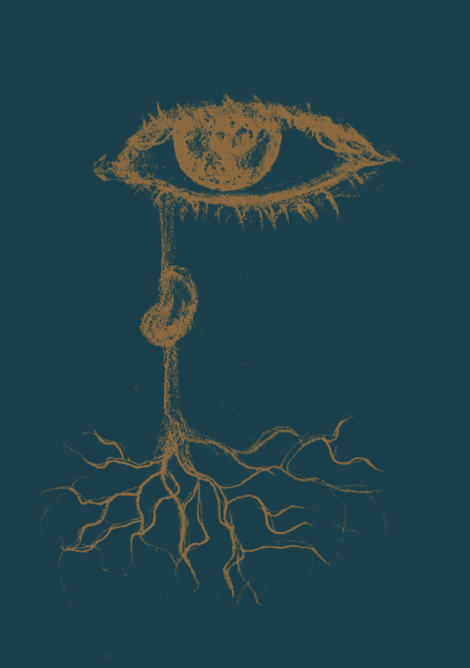
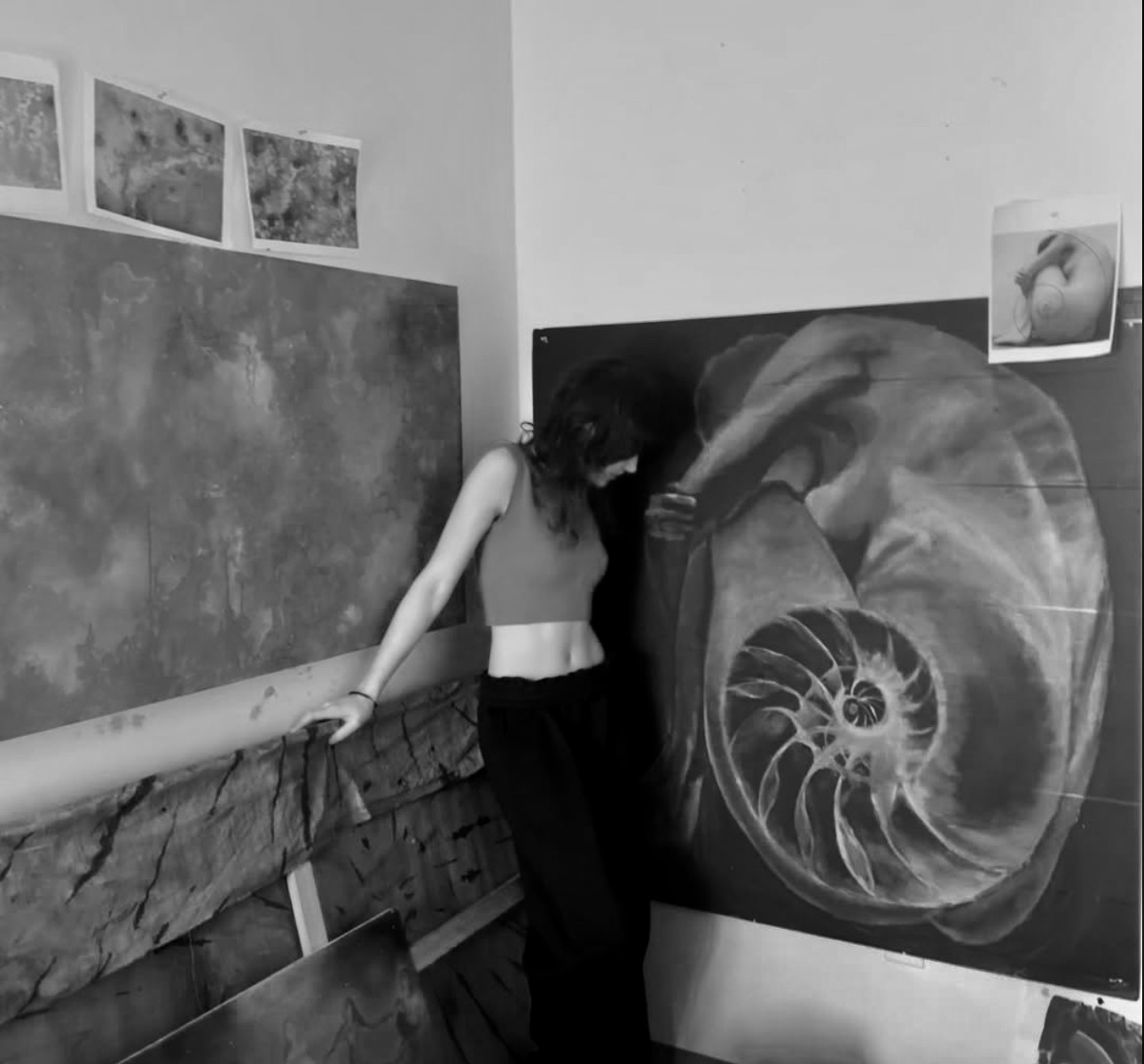
My artwork is a process of world-building and un-building. They are a reflection and untangling of my cognitive and emotional understandings of multi-scalar worlds. My primary investigations are on the interconnection of the body and the land. This has been the subject of my research-creations for the past five years. I lean towards mediums and surfaces that reflect my conceptual messaging in a principled way through experimentation. At once economical and environmental, I incorporate found materials such as wood, cork, cloth and dirt into my paintings. I also like making mediums from scratch, involving myself in the entire process and embracing slowness and intention. This includes pigments and dyes. These mediums and materials help me to communicate or inspire my ideas. I want to show that art making can be accessible, and that we do not have to succumb to consumerism in order to create. This is how I honour the land in my process. I honour the body by telling stories of resistance. We are life defending itself/we are defending life itself.
“An artists duty… is to reflect the times” – Nina Simone
Artist Bio
Cries Seeds is best known for painting whimsical natural landscapes filled with symbolism, spirit and softness. With figures often depicted within them, she illuminates the interdependence of human and non-human life. Using found materials such as cotton, wood and dirt in addition to oil/acrylic/water/house paints, she does not shy away from letting the medium inform her work and provide conceptual strength. Breaking the “rules,” she uses multiple paint mediums at once, paints on raw canvas and paints on unconventional materials with unconventional mediums. Often using thin layers, her brush strokes are soft yet have depth. Concepts regularly explore themes of relationship or lack thereof between the body and the land. Her work is influenced by anti-colonial feminism, environmentalism, Indigenous internationalism, abstract spiritualism, Persian miniature and the politics of art nouveau through the perspective of a queer Persian and French woman living on Turtle Island amidst rapid socio-ecological changes.
 Cries Seeds art